
Forging value
through time
through time
Annual Report 2025
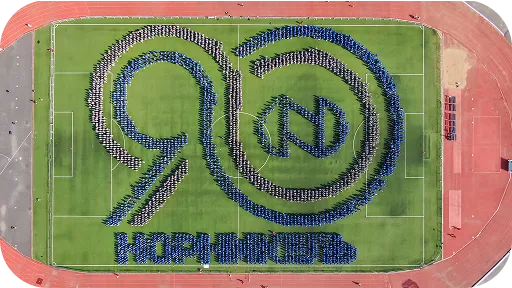
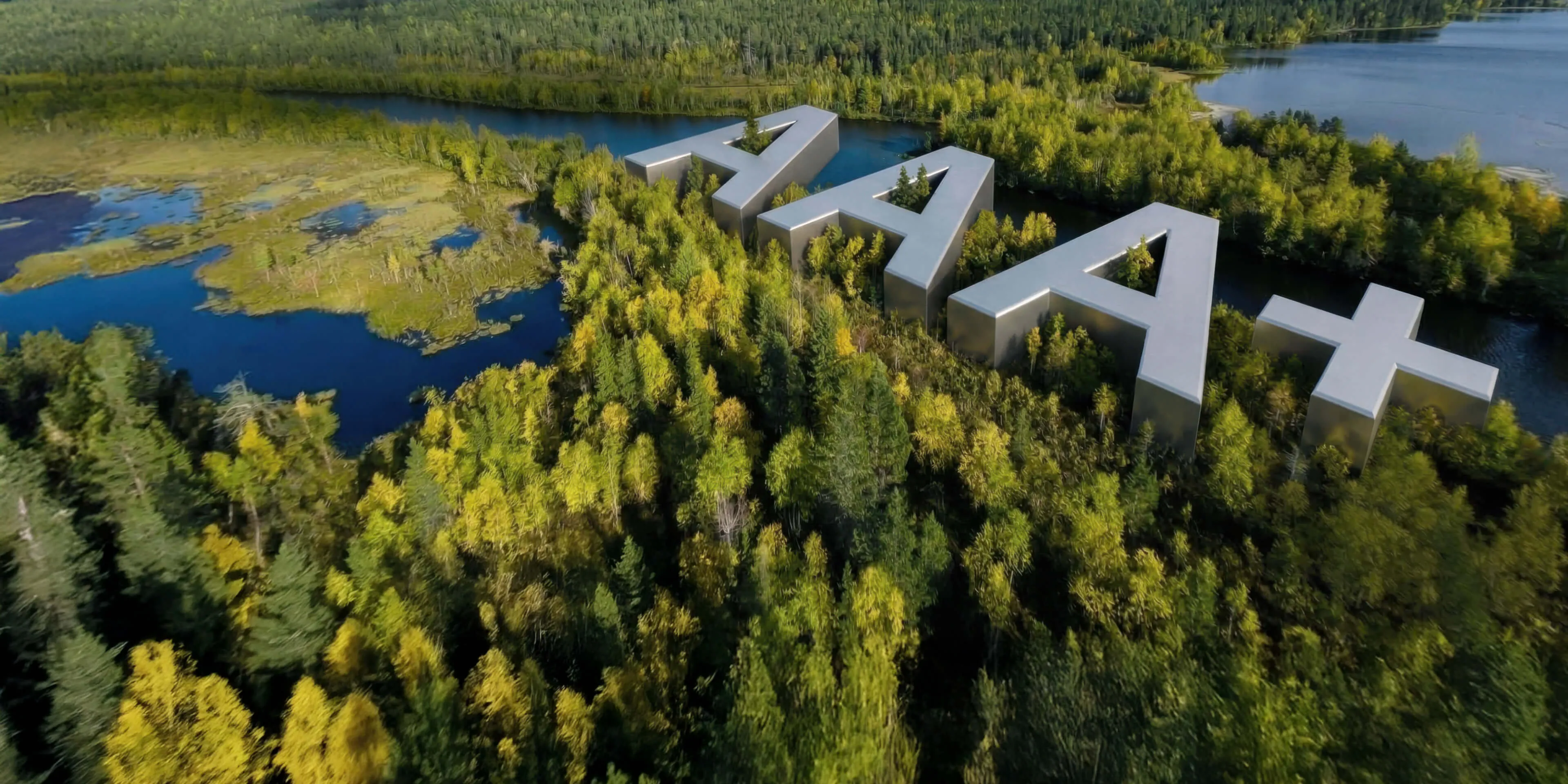
At Zapolyarnik Stadium in Norilsk, thousands of people formed a living version of the Company’s logo.
The event became the largest flash mob in Russia and was officially verified by Maxim Kozlov, an expert from the Russian Book of Records


The beginning of a great journey and wartime
1935
The Council of People’s Commissars of the USSR resolved to build Norilsk Plant. The construction project was given priority status for accelerated completion.
First facilities were built: a narrow-gauge railway, a berth in Dudinka, ore and coal mines, and a brickworks. Regular through rail service was launched on the Dudinka — Norilsk railway.
1939
First copper-nickel matte was produced, followed by converter matte.
1941
Equipment and specialists from Severonickel Plant in Monchegorsk were evacuated to Norilsk, accelerating the expansion of production capabilities.
1942
First electrolytic nickel was produced and supplied for the manufacture of tank armour.
1943
First electrolytic copper and cobalt were produced, along with the first tonnes of platinum group metals.
1944
Norilsk accounted for between 40% and 60% of total nickel production in the Soviet Union.
In May 1944, the plant was awarded the challenge Red Banner of the State Defence Committee.
Development of new deposits
1950
Post-war modernisation of the plant began.
1953
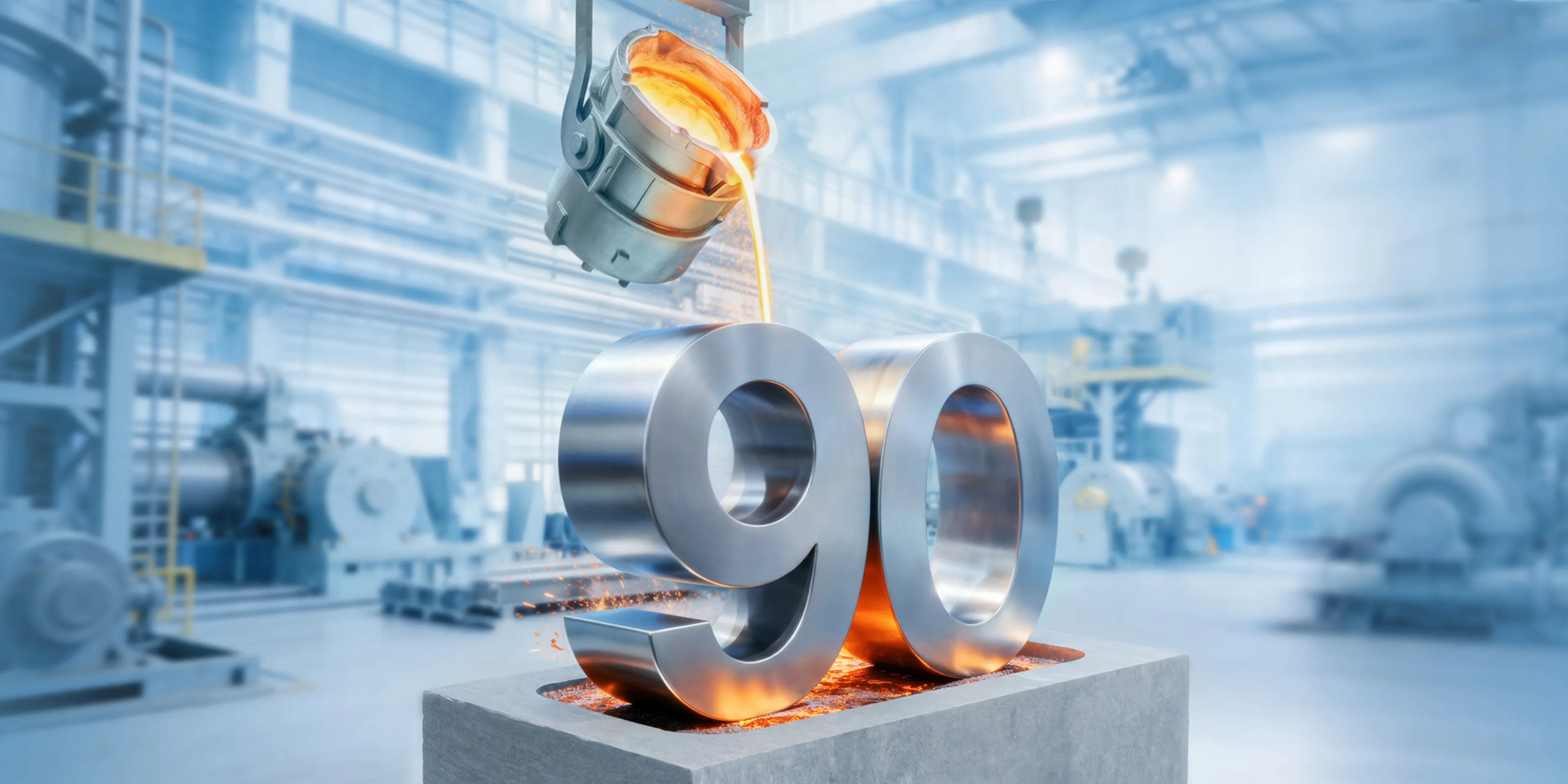
Norilsk received the status of a city, with the plant accounting for 35% of nickel, 12% of copper, 30% of cobalt, and 90% of PGMs in the Soviet Union’s total output.
1960
Talnakhskoye, the world’s largest deposit of copper-nickel ores, was discovered, providing new impetus to the plant’s expansion. First high-purity cobalt was also produced in Norilsk.
1964
Norilsk Plant was declared an All-Union Komsomol Accelerated Construction Project.
1965
The Oktyabrskoye deposit was discovered, and first ore was mined from the Talnakh cluster. Norilsk Plant was awarded the Order of Lenin.
1967
The Dudinka port acquired its first 100-tonne floating crane capable of handling extra-heavy loads.
Launch of new production facilities
1969
The first power unit of Talnakhskaya CHPP was commissioned, providing the energy to fuel the rapid growth of the metals and mining assets.
1971
The first train carrying ore was dispatched from Komsomolsky Mine to Norilsk. The mine became a testing ground for new underground mining and construction technologies that shaped the further development of mining operations in Norilsk.
1972
Construction of Talnakh Concentrator commenced.
1974
The first stage of Oktyabrsky Mine came online.
1981
The first stage of Talnakh Concentrator was commissioned. Nadezhda Metallurgical Plant was put on stream.
1982
Taimyrsky Mine was brought into production.
Transformation and development
1993
Norilsk Nickel was transformed from a state concern into a joint stock company. The change in legal form became one of the key steps in the Company’s adaptation to market conditions.
2001
The Company was restructured, with shareholders of RJSC Norilsk Nickel exchanging 96.9% of their stock to shares in MMC Norilsk Nickel. Company shares were listed on the RTS and MICEX stock exchanges, and in June, the Company started issuing ADRs.
2006
Nornickel obtained a follow-up exploration licence for the Maslovskoye deposit and four years later entered its reserves into the government books as follows: 728 kt of nickel, over 1.1 mln t of copper, 12.5 Moz of platinum, and 1.3 Moz of gold.
All of the Company’s gold mining assets were spun off into OJSC Polyus Gold.
All of the Company’s gold mining assets were spun off into OJSC Polyus Gold.
2009
The Company created its own unique icebreaker fleet with vessels being the first ones in the history of Arctic shipping to be classified as Arc7 ice class. This enabled reliable year-round logistics in the Arctic and strengthened the resilience of export shipments.
Technological upgrade
2013
The Board of Directors adopted a new development strategy focused on the Company’s Tier 1 production assets on the Taimyr and Kola Peninsulas.
2014
The Company divested its international and non-core assets, including operations in Western Australia as well as stakes in energy companies.
2016
The Company shut down its outdated Nickel Plant, driving a 35% reduction in sulphur dioxide emissions within Norilsk.
The second stage of Talnakh Concentrator was put into pilot operation in Norilsk. The concentrator’s capacity was increased to 10 mtpa of ore.
2017
The Company launched Bystrinsky GOK, the largest greenfield project in the Russian metals and mining industry.
2018
The Company embarked on the Sulphur Project, Nornickel’s environmental initiative to dramatically reduce sulphur dioxide emissions in the Norilsk Industrial District.
2019
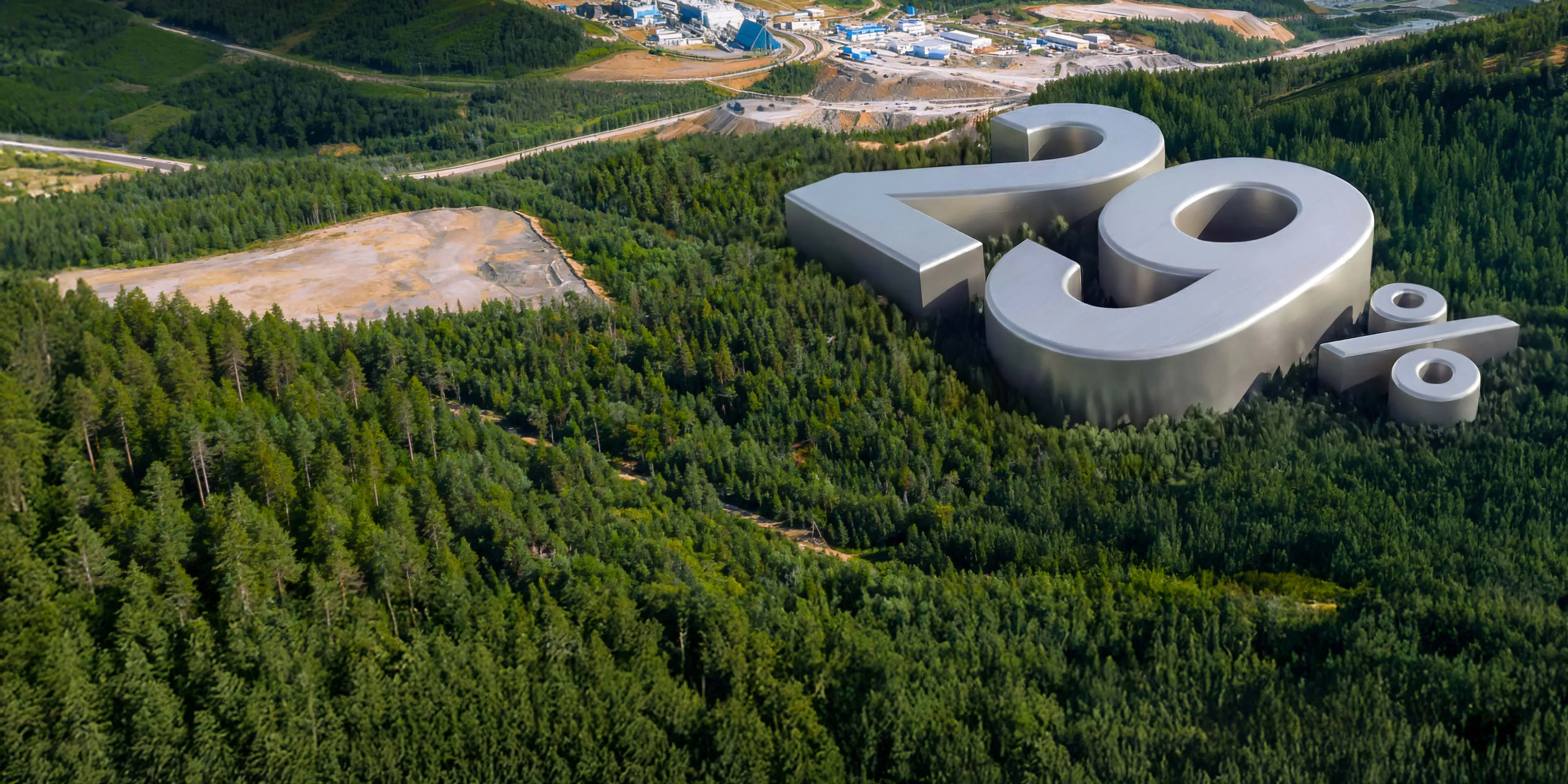
The Company became the title sponsor of the 29th Winter Universiade.
Environmental transformation
2020
Bystrinsky GOK reached its design mining capacity of 10 mtpa of ore while demonstrating high operational efficiency levels.
As part of the Sulphur Project, the smelting shop in Nikel was shut down, eliminating sulphur dioxide emissions in areas along the Russian border.
As part of the Sulphur Project, the smelting shop in Nikel was shut down, eliminating sulphur dioxide emissions in areas along the Russian border.
2021
The metallurgical shop at the Kola site was shut down. As a result of all initiatives taken, sulphur dioxide emissions on the Kola Peninsula fell sevenfold.
The Company’s Environmental and Climate Change Strategy was approved.
The Company’s Environmental and Climate Change Strategy was approved.
2022
Construction commenced on the Sulphur Project’s core facilities at Nadezhda Metallurgical Plant.
The Company’s Buildings and Structures Monitoring Centre was established in Norilsk to monitor the state of permafrost, ensuring the safe and reliable operation of facilities amid climate change.
The Company’s Buildings and Structures Monitoring Centre was established in Norilsk to monitor the state of permafrost, ensuring the safe and reliable operation of facilities amid climate change.
2023
The Sulphur Project was launched at Nadezhda Metallurgical Plant with the commissioning of the project’s first process line.
The Company published its inaugural Climate Change Report, comprehensively disclosing its climate risks and adaptation measures.
The Company published its inaugural Climate Change Report, comprehensively disclosing its climate risks and adaptation measures.
2024
The Sulphur Project’s second process line was launched, resulting in the recovery of about 390 kt of sulphur dioxide by the end of the year.
A single publicly accessible air quality monitoring system was launched in Norilsk, providing round-the-clock monitoring across different districts of the city.
A single publicly accessible air quality monitoring system was launched in Norilsk, providing round-the-clock monitoring across different districts of the city.
2025
The Sulphur Project at Nadezhda Metallurgical Plant advanced, reducing sulphur dioxide emissions by another 489 kt.
Gas cleaning facilities were commissioned at the Kola site, cutting emissions and enabling valuable components to be returned to production.
Gas cleaning facilities were commissioned at the Kola site, cutting emissions and enabling valuable components to be returned to production.
Current device resolution is not supported