Nornickel pursues a moderate growth strategy. The Company is committed to continuously improving its performance and maximising the liquidity of all current and future products.
Structure of the Company’s investment programme for 2025–2026, USD bn
Total capital investments planned for 2026 amount to RUB 240 billion, or USD 2.6 billion at a forecast average exchange rate of RUB 94 to the US dollar.
The Company’s development strategy is focused on:
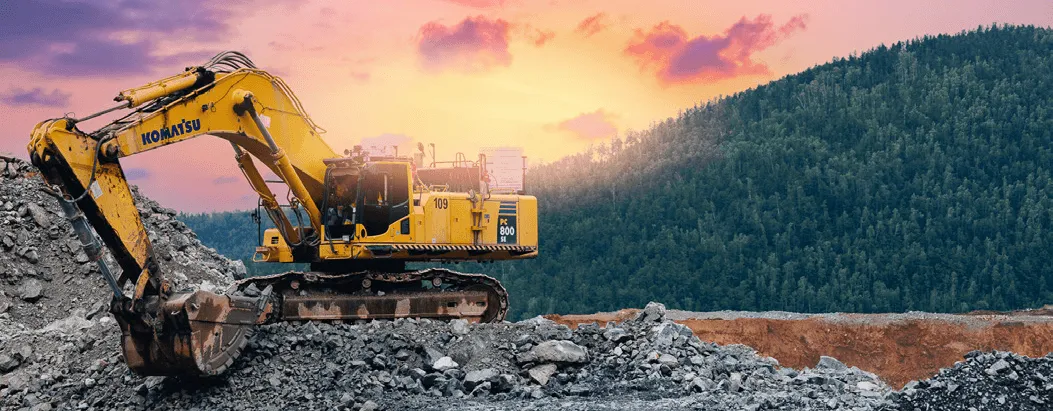
Growth in ore mining and processing volumes
Production and infrastructure upgrades
Sustainable development and ecology
The Company upholds its commitment to sustainability principles, implementing:
Environmental and Climate Change Strategy
Socially Sustainable Development Strategy
Growth in ore mining and processing volumes
Norilsk site
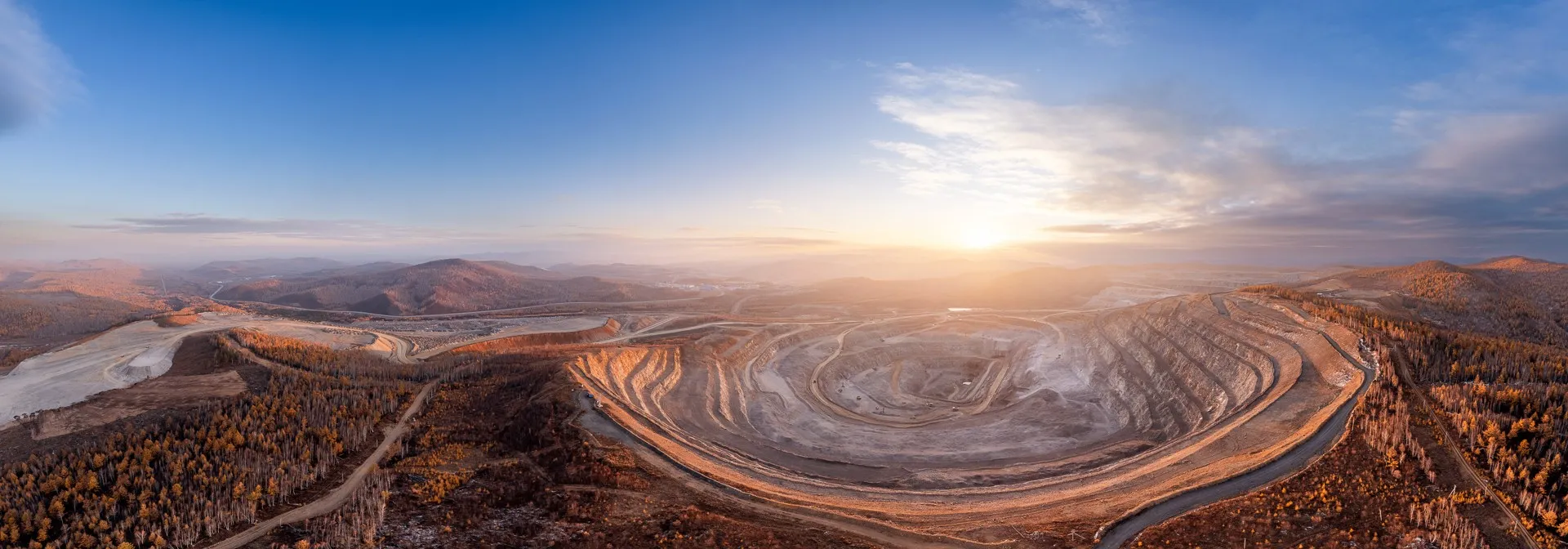
Skalisty Mine
The Company started developing a new mine level at the Glubokaya shaft of Skalisty Mine.
This is key to increasing the output of high‑grade ores from the Oktyabrskoye deposit.
Increasing production to
2.2
MTPA OF ORE
South Cluster
The project is currently in its active phase, with all work proceeding to plan.
Capital mine development is ongoing for the underground mine and related infrastructure facilities.
In 2026, the Company intends to continue its range of site development activities and obtain certificates of compliance for certain infrastructure facilities.
Mining production growth,mtpa of ore
Concentration,mtpa of ore
Upgrades of metallurgical assets
Smelting capacity at NMPNadezhda Metallurgical Plant., mtpa of concentrate
FSF – flash smelting furnace.
By 8mtpa of ore
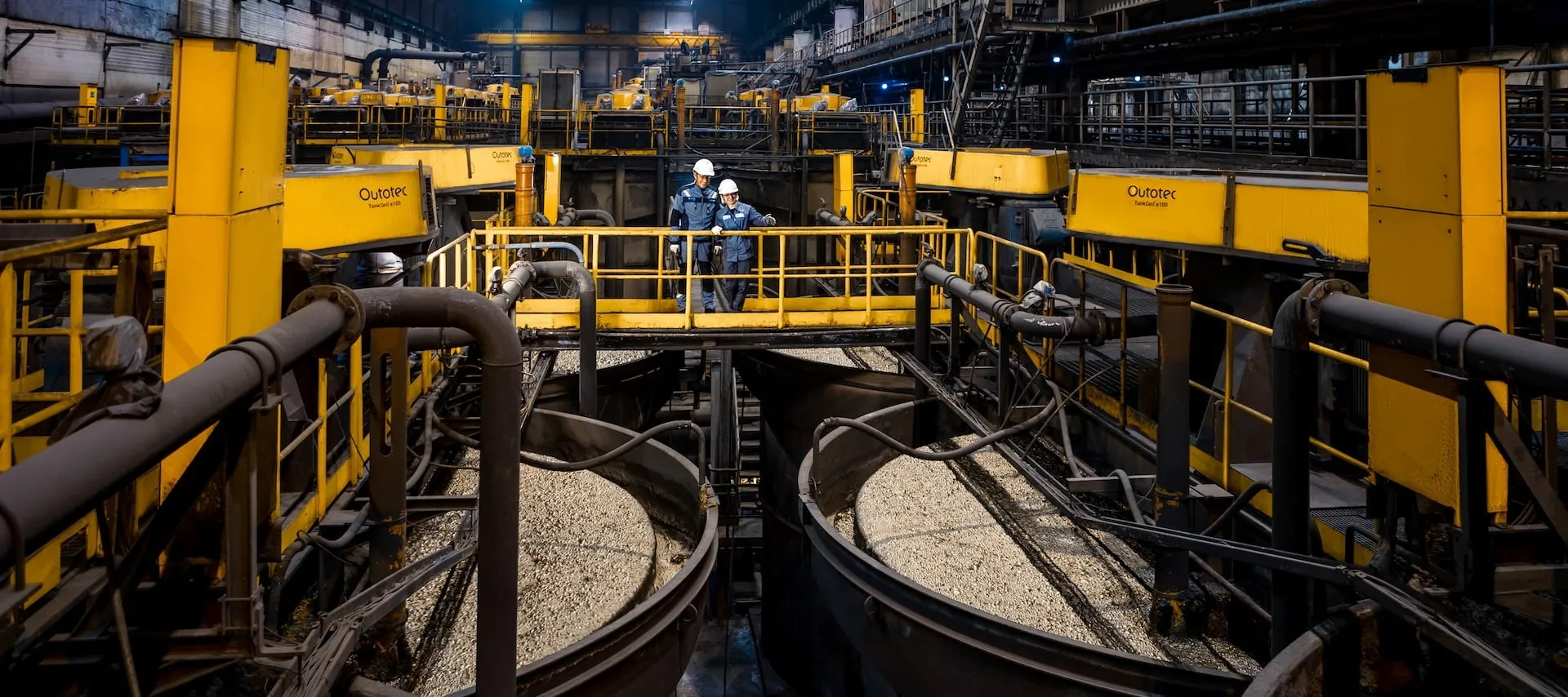
Talnakh Concentrator’s capacity increase
Maintaining leading positions in metals production:
Palladium
NO.1
High‑grade nickel
NO.3
Platinum
NO.4
Copper
NO.14
By 8mtpa of ore
Talnakh Concentrator’s capacity increase
Maintaining leading positions in metals production:
Palladium
No.1
High‑grade nickel
No.3
Platinum
No.4
Copper
No.14
Production volumes for the GroupFrom own Russian feed.
2025
2026F
2025
2026F
Ni
198
KT
193–203
KT
Cu
355
KT
336–356Excluding the Trans‑Baikal Division.
KT
Pd
2,725
KOZ
2,415–2,465
KOZ
Pt
667
KOZ
616–636
KOZ
Kola site
Severny Mine
Maintaining production at
7
MTPA OF ORE
until 2048 through the development of reserves down to a depth of 730 metres
Infrastructure
Increased throughput capacity of the Dudinka port and the Company’s own terminal in Murmansk
Renovation of generation capacities
Comprehensive reduction of energy losses
Trans‑Baikal Division
Mining and processing plant
One of the mining industry’s largest greenfield projects, built in record time.
The mining and processing plant processes ores from the Bystrinskoye deposit into copper, iron ore, and gold concentrates.
Production volumes for 2025
Ore processing
Cuin concentrate
11
MLN T
70
KT
2026 forecast
Cuin concentrate
69–73
KT
Ore processing
11mln t
Cuin concentrate
70 kt
2026 forecast
Cuin concentrate
6,973 kt
Production upgrades
Talnakh Concentrator, the third start‑up facility
Project status
In 2025, key design stages were completed, equipment suppliers were selected through procurement procedures, and materials and equipment were delivered.
In 2026, detailed design documentation is scheduled for completion, together with updated engineering surveys and the start of construction and installation works to strengthen load‑bearing structures.
Projected timeline
Commissioning of the third start‑up facility is scheduled for 2030.
Project goal: increase throughput (to accommodate the growing Talnakh ore volumes) by
8mtpa
Flash smelting furnace at Nadezhda Metallurgical Plant (NMP)
Project status
In 2025, documentation for custom‑designed equipment and the design and cost‑estimate documentation were prepared, followed by an internal review. In addition, long‑lead equipment is being procured under supply contracts.
Plans for 2026 include procurement of materials and equipment and the preparatory works.
Project goal: upgrade FSF‑1 and replace the waste heat recovery boiler at NMP, ensuring stable, uninterrupted operation of the plant’s first process line
Kola site projects
Cobalt‑3000
In 2025, the refurbishment of the 3 ktpa cobalt shop was completed. This 99.9%‑purity cobalt production facility is the only one in Russia to manufacture top‑grade electrolytic cobalt.
Refining of precious metals
A production facility for high‑purity platinum and palladium powders is under construction.
Gas cleaning system
In 2025, a new state‑of‑the‑art gas cleaning system in the refining shop’s dust collection section was commissioned. The project is expected to cut SO2 emissions by almost 1 ktpa.
3 ktpa
shop capacity for 99.9%‑purity cobalt production
by ~1 ktpa
expected SO2 emission reduction
The Trans‑Baikal Division’s MPP
Major investment projects are under way:
Commissioning of high‑pressure grinding rolls
Implementing initiatives to expand the concentrator’s throughput capacity
Constructing a gold mill
Project goal: increase production at MPP by 2030 to
16mlnt of ore
One of the largest projects in Russia’s mining industry with the life of mine
>
20years
50.01%
owned by Nornickel
Infrastructure upgrades
Fuel and energy projects
Gas and condensate
In 2025, drilling at the well pad of the Pelyatkinskoye gas condensate field was completed, and the wells are now being connected to gas gathering and treatment system infrastructure for onward transport to consumers. Construction is under way on a pipeline system for gas gathering from well pad No. 4 and for transporting hydrate inhibitor from the comprehensive gas treatment unit to the pad’s wells. Completion is scheduled for August 2026.
Pre‑commissioning operations were completed at the booster compressor station of the Severo‑Soleninskoye gas condensate field, with commissioning in December 2025.
Retrofit of the second string of the Messoyakha–Norilsk gas trunkline on the left bank of the Yenisei River is ongoing.
Project goal: renovate generation facilities and energy grid infrastructure to ensure the reliable supply of all types of energy to consumers in the Norilsk Industrial District.
Combined heat and power plants
In 2025, pre‑commissioning was completed for the unit revamp project at CHPP‑2, with commissioning scheduled for 2026.
The tank farm revamp programme continues, with six new tanks constructed since its start across three CHP plants.
Retrofit of the earthen dam at the Kureyskaya HPP is underway. The project is scheduled for completion by the end of 2026.
Tank farms
The Company continues to implement its comprehensive tank farm retrofit programme, including the construction of new storage tanks and infrastructure, as well as the rollout of an integrated automation system.
Logistics Infrastructure Development Programme
Programme rationale
Increased semi‑product shipments following completion of the copper chain reconfiguration programme.
Adjusted pace of fixed asset replacement in the Norilsk Industrial District, reflecting the optimisation of the investment programme.
Expansion of Northern Sea Route (NSR) operations and increased freight volumes for major investment projects of other companies using the NSR in the Russian Arctic.
Project goal: increase the throughput capacity of the Dudinka port and the Company’s own terminal in Murmansk by 50%
Major projects
Upgrading sea and river berths
Acquisition of additional cranes and equipment, establishment of storage areas
Sustainable development and ecology
Sulphur Project at Nadezhda Metallurgical Plant
The Sulphur Project 2.0 at Nadezhda Metallurgical Plant includes technological upgrades to recover SO2 from off‑gases of the flash smelting furnaces by converting them into sulphuric acid and then neutralising it with limestone to produce gypsum, to be placed in a gypsum storage facility.
Throughout 2025, Nornickel continued a range of construction and installation works, while equipment, process, and automation systems were being commissioned to ensure the stable operation of the first and second process lines for sulphur dioxide recovery and sulphuric acid neutralisation.
Construction and installation works were completed, and sulphuric acid production lines 1 and 2, together with sulphuric acid neutralisation lines 1 to 3, were brought into operation.
The third sulphuric acid production line and the fourth neutralisation line are scheduled to enter permanent operation in the first half of 2026.
In 2025, the Company recovered
>
480kt of sulphur dioxide
In 2025, the Company recovered
>
480kt of sulphur dioxide
Social performance
Results of the Socially Sustainable Development Strategy
Priorities
Health and safety
Talent management and corporate culture
Developing technologies and products to foster technological and social progress
Involvement in the lives of local communities and society at large
The Socially Sustainable Development Strategy supports Nornickel’s strategic priorities
2030+ goals
KPIs
2025 highlights
2030+ goals
KPIs
2025 highlights
Achieving zero fatalities and reducing work‑related injuries and occupational diseases
Eliminating catastrophic accidents
Consistently reducing safety risks to an acceptable level
Aligning living and working conditions with employee expectations
Zero work‑related fatal injuries
Eliminating catastrophic accidents
Number of fatal injuries – 5 FIFR – 0.044
Number of occupational diseases – 86 (in 2024 –139)
0 catastrophic accidents
Workplace amenities improved for more than 5.7 thousandemployees
Attracting young talent and experienced professionals, including to Russia’s Far North
Facilitating employee retention, professional growth, and development
Improving the onboarding system to support new hires and increase engagement among seasoned employees
A Top‑3 employer in Russia’s metals and mining sector according to leading rankings
4.9thousand young specialists (under 35) were permanently employedNornickel at the top of prestigious employer rankings
12.4%— employee turnover
64%— employee engagement rate
Building supply chain transparency on social metrics
Developing technologies and products that benefit society at large
Supply chain transparency
100% of mineral suppliers covered by due diligence
44% – ESG assessment coverage of suppliers of goods, works, and services
Five new high‑tech materials for solar energy, batteries, glass fibre, and the food industry were developed and successfully passed laboratory testing
Minimising the Company’s impact on local communities
Fostering sustainable social and economic development across the Company’s footprint
Supporting the interests of indigenous peoples of the North
Contributing to the well‑being of society nationally and internationally
Funding allocated by the Company to charitable projects supporting engagement with indigenous peoples came at about RUB 118 million
For more details on Nornickel’s Socially Sustainable Development Strategy targets and measures to achieve them, please see the Company’s Sustainability Report
Environmental programme
Results of the Environmental and Climate Change Strategy
Priorities
Number of emergencies
Air
Water
Tailings storage facilities and waste
Land
Biodiversity
Stock exchange requirements
Reducing environmental impact remains one of the Company’s strategic priorities.
2035 goals
KPIs
2025 highlights
2035 goals
KPIs
2025 highlights
Number of interregional and federal emergencies affecting the environment in the regions of operation
Zero emergencies affecting the environment in the regions of operation
In the reporting year, there were no emergencies in the regions of operations
Reduction of SO2 emissions from a 2020 baseline, ktpa
SO2 emission reduction, %
Reduction of SO₂ emissions to 198 ktpa
90% reduction
SO2 emissions were 1,160 kt, down 39% from the 2020 baseline
Construction (reconstruction) of treatment facilities at wastewater discharge sites, %
Water reuse (closed‑loop water system, reduction of water withdrawals), %
100% availability of treatment facilities at wastewater discharge sites
At least 80% of recycled water
37% – construction of wastewater treatment facilities
80% – reused and recycled water
Compliance of waste disposal facilities with Russian legal requirements, %
100% compliance with regulatory requirements for waste disposal facilities
98%compliance
Land rehabilitation (reclamation, reforestation, clean‑up, revegetation), ha
Rehabilitation of disturbed land – 4,064 ha
1,644 ha– total land rehabilitated since 2021 (on a cumulative basis)
Achievement of no net loss of biodiversity as a result of the Company’s operations (∆ Integrated Ecosystem Health Indicator)
≥0
0
Compliance of the Group’s business units with the sustainability requirements of stock exchanges