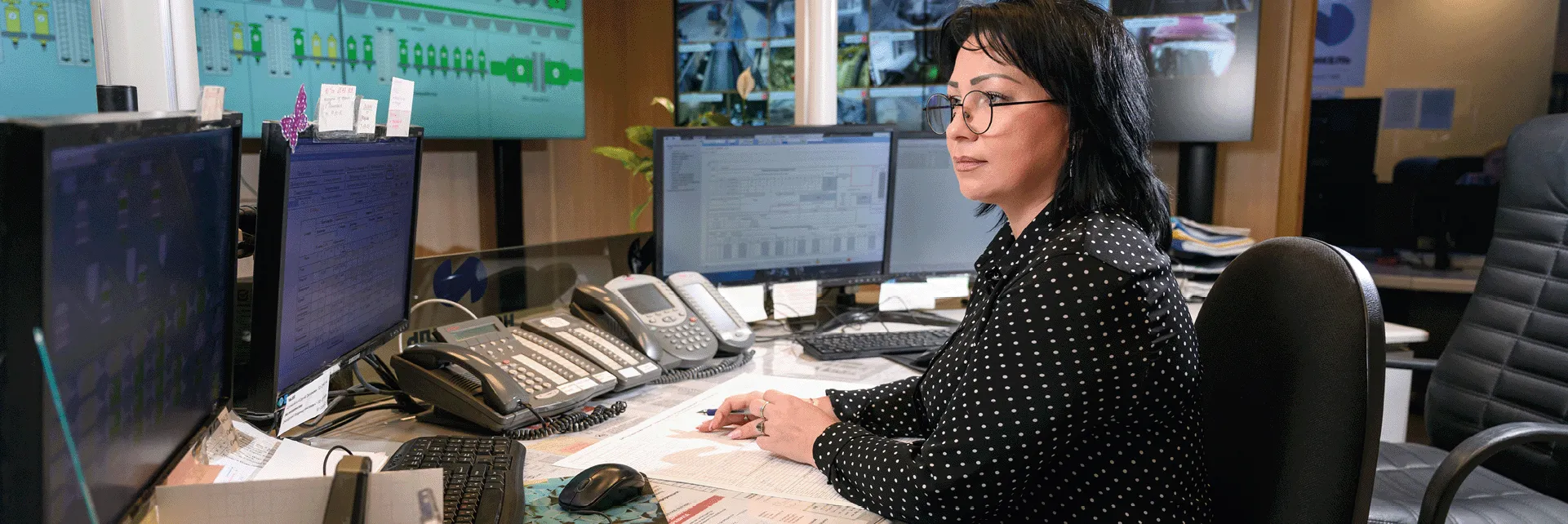
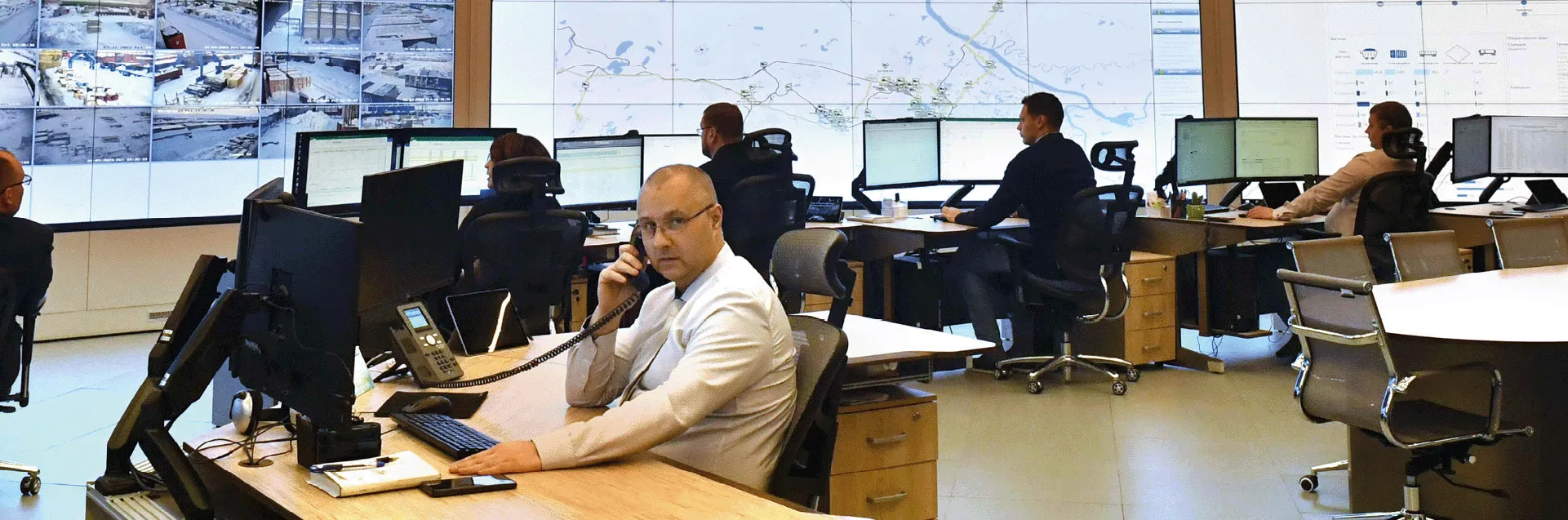
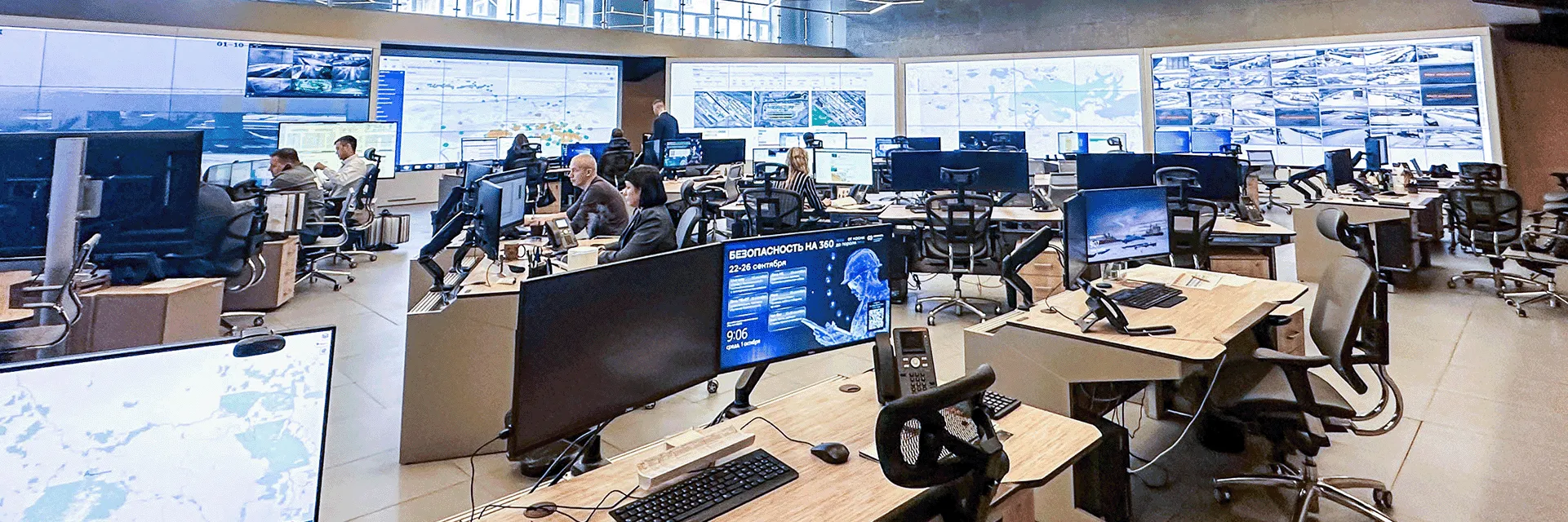
The introduction of smart technologies across the Company’s operations, together with the development and deployment of digital solutions in its business processes, supports the growth of its technology‑driven business, strengthens industrial safety, improves operational efficiency, and enhances quality of life across Nornickel’s footprint. The Company is steadily rolling out IT initiatives to support its core business segments and strengthen technological sovereignty.
In 2025, the Company marked its 90th anniversary and, at the Digital Industry of Industrial Russia (CIPR) conference, Nornickel unveiled nine flagship projects across ten categories of the CIPR Digital Awards 2025. All of the projects were shortlisted, and six were named winners in their respective categories.
The most notable achievement was the Company’s win in the special Technological Leadership category established by the Digital Economy autonomous non‑profit organisation. Nornickel was recognised as the company making the most significant contribution to Russia’s national goal of achieving technological independence in key sectors.
Key focus areas in innovation
Nornickel relies on innovative technologies, including artificial intelligence (AI) and machine learning (ML), at all stages of its production process – from exploration to smelting – to streamline processes and make its operations safer for people and the environment.
The Company’s goals are not only about research, development, and deployment of promising technologies but also about building the Company’s own R&D capabilities, shaping internal policies, and fostering a culture of high‑tech developments.
The primary contractor for scientific and technical projects for the Company is its own dedicated research institute. It is one of Russia’s largest research and engineering centres for mining, concentration, metallurgy, and processing of minerals, with a comprehensive portfolio encompassing the development and production of scientific and technical products.
Digitisation of the Manufacturing Chain
High‑Tech Products
Digitisation of the Manufacturing Chain
Ecology and Industrial Safety
RUB11.7billion
was allocated in 2025 to IT, innovation, and digital projects, of which RUB8.4billion was directed to IT initiatives (2024: RUB8.7billion).Since 2024, the approach to data compilation has been revised to include costs associated with previously launched divisional projects.
Ecology and industrial safety
Emissions monitoring
The Company continues to advance its Axioma project, an innovative predictive emissions monitoring and control system with no equivalent in Russia. Air pollution levels are monitored in real time. The AI‑powered system creates digital twins of industrial equipment to model process flows and capture emissions data.
In 2025, the Company continued extensive engagement with expert groups, legislative and executive authorities, and supervisory bodies. This effort, driven in part by the lack of established practices for deploying such systems in Russia, addressed the need to secure recognition of Axioma at the national level as a full‑fledged alternative to instrument‑based emissions monitoring systems. In 2025, Axioma was also officially recognised as a measuring instrument by order of Rosstandart. An application has been submitted to the Ministry of Digital Development, Communications, and Mass Media to include the system in the Russian software register.
The completion of Axioma’s pilot operation stage, together with its recognition as a measuring instrument, not only enabled the Company to complete product development in 2025, but also helped enhance the system’s functionality to optimise process parameters across the production chain and move from pilot deployment to full‑scale rollout across production sites.
In 2025, the system was showcased at national exhibitions and forums and presented to around 40 businesses, generating strong market interest. The deployment of Axioma is expected to reduce capital expenditure by up to 50% and operating costs by up to 60% compared with instrument‑based emissions monitoring systems.
Project awards and recognition:
the Product of the Year award at the AI‑Olymp Awards 2025
an annual CIPR Digital Award in the Best Application of AI category
a diploma of the Best ESG Projects in Russia 2025 award programme in the Responsible Consumption and Production: Managing Environmental Impacts category.
Video analytics
Nornickel is actively developing video analytics and machine vision systems to address production challenges, improve economic efficiency, and enhance occupational safety. In 2025, the Company expanded the use of video analytics (computer vision) across its production processes, as well as in health and safety.
Development of the NVI video analytics platform was completed. Its deployment has accelerated the development and standardisation of business applications. During the year, four solutions were migrated to the platform’s target architecture.
The performance of the foreign object detection system on ore conveyor belts at Bystrinsky GOK was also improved, and the solution was rolled out across conveyor systems at the mines and Norilsk Concentrator at the Norilsk site.
In addition, solutions were developed for real‑time analysis of flotation processes for two types of flotation cells, enabling timely responses to ongoing chemical reactions and process adjustments.
The solutions are scheduled to be piloted in 2026.
Transport planning and management system
The Company continues to improve efficiency in transport logistics and, in 2025, deployed the SPRUT digital logistics system.
SPRUT is a unified, centralised system for planning and managing transport operations and services, enabling optimisation of end‑to‑end supply processes and ensuring operational continuity. The unique platform has been deployed across key production sites.
In 2025, the system was showcased at national exhibitions and forums, including the ComNews Awards and CNews FORUM, and was also presented to around 20 companies, generating strong market interest.
The project was recognised at the annual CIPR Digital Awards in the Smart Transport category as the best digitalisation project in the transport sector.
Rapid Hazard Identification app
In 2025, lessons learned from the pilot implementation of the prototype Early Warning System for Potential Issues and Incidents (NoRiskNN)For more details on the app, please see theCompany’s 2024 Annual Report. mobile application were used to develop a new version, the Rapid Hazard Identification (RHI) mobile app. The solution was designed as a single digital tool for the prompt identification, recording, and mitigation of H&S risks directly in the workplace.
RHI features an intuitive interface and is fully integrated with the corporate Control, Management, Safety automated system (CMS AS), where reports are processed, response times are tracked, and analytical statistics are generated.
The application’s functionality includes key mechanisms for employee engagement:
the ability to submit reports anonymously;
feedback to the reporting employee at every stage of report processing;
the ability to refuse unsafe work;
tools for suggesting risk mitigation measures and participating in their implementation.
Following the pilot rollout at the Kola site, the solution is scheduled for wider deployment. Further enhancements planned by the end of the first quarter of 2026 include gamification features and engagement widgets potentially offering monetary rewards for active participation in building a safety culture.
Enhancing production technology
High‑precision drilling guidance systems
The project covers all types of drilling rigs and is aimed at:
reducing dilution with waste rock and concrete in stoping and development operations;
reducing surveying errors in mine development;
reducing production losses.
An automated hardware and software system was developed, comprising a set of sensors, a robotic total station and an onboard computer with specialist software for precise positioning.
The solution enables the drilling guidance system to work from a digital drilling plan for both production blast holes and development drill holes.
In the first half of 2025, pilot trials of the systems were successfully completed at Zapolyarny Mine (Norilsk site). During the trials:
the core algorithms and technical solutions were tested and refined;
surveying errors in the pilot workings were reduced from 24% to 2%.
In November 2025, a pilot project was launched to scale the solution at Skalisty Mine (Norilsk site). In 2026, the Company plans to roll out the system to the Norilsk site’s entire drilling rig fleet.
Geological data analysis
The Company continues a major project to develop and deploy an automated mining and geological data processing and analysis systemFor more details on the project, please see theCompany’s 2024 Annual Report.. The MinePRO system by Russian developer OT‑OIL was selected for the project and is currently being adapted to meet Nornickel’s specifications.
In 2025, MinePRO continued to be developed to further automate the planning and execution of geological exploration, geological calculations, and mineral reserve tracking.
The rollout of MinePRO helped ensure the quality, availability, and accuracy of production data across all levels of the Company, which, in turn, supports timely and effective management decision making.
Surveying errors in the pilot workings were reduced
from24 to 2%
Platforms for operational processes
In 2025, significant effort was invested in launching Industrial ML clusters, focused primarily on two objectives:
accelerating the deployment of digital production projects by removing the need for iterative design;
reducing the analytical load on production control systems.
In 2025, one such cluster was launched into pilot operation at the Kola site. It is a service platform enabling the deployment of dozens of high‑impact innovative APCAdvanced process control. solutions to drive optimisation. Commercial operation is scheduled to commence in the first quarter of 2026.
At Talnakh Concentrator, commercial operation is scheduled to commence in the first half of 2026. An advanced control application for feeders and semi‑autogenous mill is planned for implementation. A Norilsk Concentrator, a cluster featuring an innovative flotation solution is scheduled for commercial launch in 2026.
Concentration
In 2025, solutions were developed for real‑time analysis of flotation processes for two types of flotation cells, enabling timely responses to ongoing chemical reactions and process adjustments. The solutions are scheduled to be piloted in 2026.
In November 2025, an AI‑powered flotation advisor was commissioned at the Kola site’s concentrator. The AI‑based system monitors dozens of parameters in real time, including ore pulp mass and density, reagent consumption, air flow, and metal concentrations. Based on these data, it determines the optimal operating conditions, increasing recovery of valuable components and reducing production losses.
In 2025, a microbubble pulp aeration system was developed and tested in the flotation process to enhance the recovery of base and precious metals. The technology is based on porous aerators and dispersers generating bubbles smaller than 200 μm, enabling more efficient recovery of fine particles below 20 μm, which are typically difficult to recover under conventional flotation conditions. Implementation activities are planned for 2026.
In 2025, successful trials were also conducted on aeration assemblies of an optimised design for flotation cells. Using hydrodynamic flow modelling within the flotation cell, an optimised aeration assembly was developed, enabling more efficient distribution of air bubbles and coarser material within the cell. This improves flotation efficiency and increases recovery of base and precious metals. The optimised aeration assembly also eliminates large dead zones that reduce the efficiency of mineral attachment to air bubbles. Large‑scale trials are scheduled for completion in 2026.
Process optimisation at Bystrinsky GOK
Bystrinsky Concentrator end‑to‑end optimisation project was launched in 2024 to maximise throughput while maintaining recovery rates and key process parameters. In 2025, the project successfully completed the pilot trial phase and moved to extended operation.
As part of the project, an end‑to‑end AI/ML‑based algorithm was implemented, integrating the key stages of the concentrator process: grinding, classification, and flotation. The algorithm analyses the current state of the process, identifies opportunities to increase throughput, and, where such potential exists, automatically raises productivity through adaptive control of classification modes and adjustment of flotation concentrate quality targets.
The end‑to‑end nature of the solution is enabled by integrating all core process stages, from the start of grinding through to the final flotation stage, into a single optimisation loop. This makes it possible to capture the interdependencies between various process parameters and ensure stable concentrator operation under optimal conditions.
The project was delivered by the Company with support from an external contractor responsible for developing the software solution.
Results from extended operation in 2025 confirmed the practical benefit of the project, with throughput increasing by more than 10 kt while maintaining recovery rates and the yield of the target size fraction. Further development of the algorithm is expected to incorporate a wider range of factors affecting throughput potential and recovery losses.
Metallurgy
In 2025, a project was launched to minimise dust carryover and improve the performance of flash smelting furnace No. 2 at Nadezhda Metallurgical Plant through the development and validation of a high‑precision digital model.
The Vanyukov Furnace Smelting Optimisation project was launched in 2023 to minimise the content of non‑ferrous metals in waste slag at Copper Plant by maintaining matte copper content within a pre‑defined target range.
In 2025, pilot trials at Vanyukov furnace No. 3 were successfully completed, delivering a 0.13 p.p. reduction in copper losses to slag, and rollout of the solution to Vanyukov furnace No. 2 commenced.
The project delivered a digital solution based on:
online data on the chemical composition of the charge fed to the furnace, captured using an installed stationary XRF analyser;
monitoring of the furnace’s physical operating parameters covered by the digital solution, including charge and flux feeder data, caisson temperatures, and oxygen consumption;
a digital model of furnace operation that continuously predicts matte copper content and generates recommendations for optimising the smelting process.
0.13%
reduction in copper losses to slag during pilot trials at Vanyukov furnace No.3
High‑tech products
Palladium Centre
The Company’s Palladium Centre develops, tests, and brings to market new high‑performance palladium‑based materials for high‑potential industrial applications. The Centre’s portfolio includes more than 30 projects involving new palladium‑containing materials across three categories: high‑performance alloys, catalysts, and functional materials. In the long term, the Company aims to bring over 100 new developments to market, which, according to internal estimates, could generate at least 40 to 50 tonnes of new palladium demand by 2030.
In 2025, the new materials and AI laboratory, a dedicated science and technology hub, was launched. It is the world’s first laboratory fully focused on the development and study of all new types of palladium‑based materials, including catalysts, high‑performance alloys, and functional materials. The lab is equipped to work with palladium and other precious metals and enables a full‑cycle materials development process, covering every stage from hypothesis generation, synthesis, and instrumental analysis to testing.
In addition, the laboratory is engaged in the development of gen‑AI models and digital materials science.
Its architecture enables researchers to capture the full range of palladium’s potential applications, understand interrelationships at the most fundamental level, train advanced AI models in digital materials science, and ultimately engineer materials for exceptional performance within shorter timeframes.
In 2025, testing of palladium‑containing materials for the glass fibre industry was successfully completed, including semi‑industrial trials of Pd alloys for bushings and industrial trials of palladium‑based current leads. The first batch of palladium was also procured for the commercial deployment of Pd current leads at glass fibre production facilities. Following these successful trials, the Centre is refining prototypes of palladium‑based electrodes for water treatment to adapt them to operating conditions in the Chinese and Middle Eastern markets.
In 2025, the Centre also successfully tested materials for hydrogen applications, including catalysts for PEM electrolysers and fuel cells. The Centre also presented successful test results for perovskite panels incorporating Pd additives and began developing a tandem solar module combining the key advantages of silicon and perovskite technologies.
Battery materials
Nornickel’s Battery Technology Centre in Saint Petersburg is a new area of the Company’s business focused on advancing technological capabilities in the promising field of nickel‑bearing cathode active materials (CAMs) – a key component in modern batteries.
The centre has concentrated its efforts on the development and research of battery materials using state‑of‑the‑art process equipment unique in Russia, enabling the full cycle of synthesis and testing under specialised conditions.
As a result, several samples of cathode active materials (CAM) and their precursors (PCAM) for NCM 811+ chemistry have been produced, and experiments are ongoing to further refine and scale the technology. Development of new products commenced in 2025. The outcomes of the centre’s efforts are expected to lay the groundwork for future production projects in the battery materials sector.
Metal alloys
High‑tech materials capable of withstanding extreme operating conditions play a critical role in modern industry. These include nickel and cobalt alloys, which offer a unique combination of properties, including high‑temperature strength, heat resistance, and corrosion resistance in aggressive environments. The key properties of these alloys are determined by their chemical composition, with a nickel content exceeding 50% and a cobalt content starting from 20%. Nickel alloys, supplied as preforms and powders, are in high demand and widely used across global industry, including the aerospace, nuclear, chemical, and oil and gas sectors. Nornickel is actively advancing this business, building a full production cycle from raw materials to innovative metal powders and high‑performance alloys.
The Company is implementing a range of projects focused on the development and introduction of new materials:
in additive manufacturing, prototypes of nickel‑ and cobalt‑based powder materials have undergone comprehensive laboratory testing, which confirmed their high quality for various technology applications;
in the energy sector, laboratory testing of nickel‑based high‑performance alloys was completed in 2025. Quality certificates were obtained confirming the suitability of the engineered high‑performance alloy for the manufacture of gas turbine components;
in the oil and gas industry, the first pilot batch of high‑performance alloy was produced for the domestic market. The material will be used to manufacture components for upstream equipment;
in the medical industry, a pilot batch of off‑spec cobalt cathodes was sold for alloy production. Positive feedback was received from the end user, and increased supply volumes are planned for 2026;
research is ongoing to optimise the Company’s processing of off‑spec metals. Studies are also under way on refining off‑spec nickel cathodes to reduce costs and produce high‑margin products.
Comprehensive research into new nickel‑ and cobalt‑based materials will enable the Company to increase the annual demand for these materials in the alloys sector by up to 10 kt.
Enhancing corporate business processes
Data lake ecosystem
The data lake ecosystem plays an important role in the Company’s digitalisation and AI operationalisation journeys. It comprises the following key components:
the data platform,A data platform forming part of the data lake ecosystem. used to store and process big data;
the ML platform,A platform supporting the full lifecycle of machine learning. which supports the full lifecycle of AI/ML applications;
industrial ML clusters, which enable digital solutions to be deployed directly in industrial settings.
Powerful ClickHouse and Kubernetes clusters have been deployed to the live environment, running on the data platform to support digital business initiatives and projects. An end‑to‑end CI/CD process has also been implemented to reduce time to marketTime‑to‑market (TTM) is a metric that measures the time from product idea to market launch and sales. for digital applications. In 2025, 29 new production and business initiatives were implemented.
Access to the ML platform was provided to Company specialists as well as to developers from external contractors engaged in the implementation of the Company’s initiatives and projects.
In 2026, the Company plans to create a dedicated LLMLarge language model. environment, which will enable AI agents and intelligent assistants to be deployed to the live environment using a high‑performance data ecosystem.
Electronic document management
In 2025, Nornickel successfully reached another milestone in its strategic digitalisation programme, achieving tangible results in improving the operational efficiency of its core processes while complying with the relevant legislation.
Business processes have become faster and more transparent. Following the regulator’s policy of 100% electronic invoicing by 2029, the Company continued the migration of remaining paper‑based transactions to its EDMElectronic document management. system, including complex transactions involving precious metals.
The Company is continuing the large‑scale conversion of internal inventory accounting documents, bringing the business closer to its goal of a paperless shop floor. Accounts payable accounting has been automated for new transaction types. The volume of electronic workflow has increased twice, with work/service orders fully transitioned to electronic format, and bank guarantees integrated into the EDM system.
Work on converting transport documents into electronic format was promptly launched to ensure compliance with legislative requirements by 1 September 2026. In government relations, the Company met all legal requirements and continued the expansion of automation scenarios in its engagement with the Federal Tax Service.
In 2025, the HR Documents Online HR electronic document management system (HR EDMS) went live on a platform operated by the Company’s Head Office. The HR EDMS has minimised the use of paper‑based documents, enabled the transformation and technological unification of business process documentation, and provided the ability to forecast and respond quickly to internal and external changes affecting document flows in HR and social business processes.
The share of EDM within the Company in 2025 was as follows:
67% for external source documents (2024: 46%);
50% for automated postings;
79% for HR EDM.
Government Data Platform
In 2024–2025, Nornickel played an active role in reshaping the business–government interaction model, acting as both initiator and participant in a pilot project to develop a new unified mechanism for collecting data from businesses, the Government Data Platform.
This initiative is fully aligned with the objectives of the Data Economy national project, which aims to establish a secure and technologically advanced infrastructure for real‑time data sharing between businesses and the government. Drawing on its extensive involvement in existing reporting systems, including 108 state information systems across 43 government agencies, the Company contributed expert input based on the practical needs of a large business. A roadmap for interdepartmental cooperation on the project to 2030, with the Company’s participation, has been approved.
As part of the preparatory phase, key parameters of the 2026 pilot were agreed, including the selection of an IT solution and the development of functional requirements for the first phase of implementation. Participation in this initiative represents a strategic contribution by the Company to the development of a new technological foundation for official statistics and reporting. The project is expected to enable the transition to unified data standards, which over the long term will significantly reduce the administrative burden on businesses, improve the quality and consistency of data for government, and create a foundation for sustainable digital interaction.
Supernika mobile app
Supernika is a unique corporate application that integrates a wide range of the Company’s services and tasks. Through the application, more than 71 thousand employees, including those without access to a computer, have 24/7 access via their personal mobile devices to over 45 corporate services, including an employee personal account, business travel and leave requests, training, KPIs, sports, news, PPE, HR EDM, and even the ability to book a medical appointment.
Supernika is continuously evolving. In 2025, the application received several updates at once, making workflows even simpler, faster, and more convenient:
key topics were structured;
group calling functionality was improved, enabling users to join conferences created in Supernika from multiple devices simultaneously;
access to the Nornickel Academy was streamlined, with password‑free access to learning content introduced for employees from 2025 The Training and Development section now provides information on a wide range of courses across all employee categories.
The project received the Best Digital Platform award at CIPR Digital Awards 2025.
Improving the efficiency of production and economic planning processes
The implementation of a production and economic planning system will enable flexible modelling of highly complex material flows across the Concentration and Smelting value chains within a single digital environment while incorporating economic considerations.
During 2025, efforts focused on pilot operation of the Concentration model and on developing material balances for the Smelting stage. Tangible results have already been achieved: for the first time, the Company has developed its 2026 production plan using the Concentration model within the system.
In 2026, the project team plans to complete system development, providing the Company with a rolling replanning tool that has a 42‑month horizon across the Concentration and Smelting value chains, enabling shorter planning cycles and improved accuracy.
Project awards and recognition:
an award in the Industrial Scale category at the CIPR Digital Awards;
the Best Digital Solution for Integrated Planning award at the 14th ComNews Awards: Best Solutions for the Digital Economy.
Unified Treasury Solution
In 2025, the Company implemented a unified treasury system based on domestic solutions, including 1C: Holding Management and the Foresight Analytics Platform. The solution automates key treasury tasks:
liquidity management (including a payment calendar with scenario modelling);
financial transaction management (including scenario modelling of transactions and the debt portfolio, storage of forecast versions, scenario comparison, and impact analysis on liquidity);
financial risk forecasting and management (including a forecasting model comprising over 700 metrics, built on a hierarchical structure with over 30 levels of aggregation and calculation logic);
The Unified Treasury Solution enables the Company to obtain structured financial information automatically and to effectively address business tasks related to financial planning and forecasting, liquidity management, and enhanced oversight of risk factors.
Project awards and recognition:
two awards (Project of the Year and Product of the Year), as well as a nomination for Team of the Year at the Mercury 2025 national awards in Finance Automation;
the audience choice award at the Transformation 2025 corporate improvement projects competition held as part of IN’HUB 2025 Innovation and Productivity Week.
Information security
Nornickel’s Information Security Policy applies to all employees and includes the engagement boundaries and responsibilities of the Board of Directors and the Management Board in this regard. Senior management’s responsibilities include, among other things, reviewing information security risks. Risks are monitored on a regular basis through dedicated committees and corporate reporting.
The Company has developed and is implementing an information security strategy to 2028, with the following key objectives:
achieving technological sovereignty;
enhancing the protection of the Company’s assets;
reducing potential losses from cyber attacks;
improving the operational efficiency of the information security function.
In 2025, the Company operated in an increasingly complex cyber threat landscape, with a growing potential impact on business resilience. The expansion of digital environments, rising third‑party cybersecurity risks, and the progressive evolution of technological solutions have created additional requirements for the information security management system.
The Company’s information security function continues to consistently enhance a service‑driven, risk‑based management model aimed at ensuring the continuity of business processes. Key priorities for 2025 included the delivery of the project pipeline, the implementation of strategic initiatives, and further improvements to information security processes.
In planning its activities, the Company takes into account external factors, including ongoing geopolitical uncertainty and the government’s policy of driving technological sovereignty and the import substitution of IT and information security solutions. As part of risk management, particular attention is given to engagement with contractors and suppliers, including monitoring their compliance with information security requirements.
The Company continues to consistently strengthen perimeter protection of its technology infrastructure and to implement initiatives aimed at improving the resilience of critical systems.
The Company conducts regular assessments of the security of its information systems and infrastructure, using the results to update safeguards, prioritise initiatives, and strengthen Nornickel’s overall cyber resilience.
Security and vulnerability management
The Company has completed all activities planned for 2024–2025 to boost the overall security of its automated process control systems (APCSs) and to implement audit recommendations from 2023.
Nornickel’s production enterprises completed their activities under the plan to implement basic process safeguards in 2025, improving the security of industrial automation systems.
Nornickel continues to develop and maintain a highly cyber‑resilient production environment, with strengthening the cyber resilience of key production assets and technological infrastructure remaining a consistent priority. In collaboration with industry partners, the Company continues to embed security by default in APCS solutions, built on secure‑by‑designSecure‑by‑design is an approach to software and IT system development where security is embedded in architecture, code, and processes from the outset, rather than added post‑development. The secure‑by‑design cybersecurity approach ensures that products are inherently resilient to vulnerabilities from the design stage. principles, whereby considerations of security are at the forefront from the earliest stages of development.
In 2025, the Company also launched a programme to enhance the internal security of APCSs, with certain solutions enabling a significant improvement in the security of industrial automation systems without requiring additional financial resources.
Key efforts in 2025 focused on improving the effectiveness of existing vulnerability management processes. The practice of regular security reviews became more widespread, including assessments of critical MES and ERP systems.
Procedures for rapid response to emerging and actively exploited vulnerabilities were further refined. This resulted in a significant reduction in mean time to detect and, consequently, lower risk of exploitation in potential cyberattacks against the Company.
The Company continues to consistently strengthen protection of its external network perimeter. Processes are being established to ensure continuous monitoring of the state of external systems, both to identify newly emerging vulnerabilities and to detect unauthorised changes.
Data protection
The Company has established and operates a robust multi‑layered information security system covering both personal data protection and critical information infrastructure safeguards. The system comprises organisational, legal, and technical measures aimed at ensuring business process continuity, regulatory compliance, and protection against current cyber threats.
Given the increasing complexity of the threat landscape and heightened regulatory scrutiny, the Company is consistently implementing measures to minimise the volume of personal data processed within business processes while also bolstering the defences of critical information infrastructure. This approach significantly reduces regulatory risks, including the risk of personal data breaches and disruptions to critical infrastructure.
In response to the growing number of corporate mobile services and the continued blurring of boundaries between work and personal digital environments, the Company updated its approach to mobile security in 2025. This included the standardisation of rules governing the installation and use of mobile applications, as well as the identification of existing exceptions that adversely affect corporate information security. As a result, an optimal balance was achieved between information security requirements and the efficient use of mobile applications.
Security of cloud technologies and AI
In 2025, particular attention was given to safeguards for the migration of certain corporate information systems to cloud, as well as the deployment of gen AI technologies across the Company.
Nornickel is building a long‑term information security engagement strategy in relations with cloud providers and leading domestic companies specialising in large language models. As part of this effort, key principles were defined to ensure the protection of data and corporate IT infrastructure from security risks associated with cloud solutions. A roadmap has also been developed for the implementation of information security tools for the Company’s cloud‑based resources. These principles and the associated toolkit are, in many respects, unique in the Russian market and may serve as a benchmark for other industrial companies.
In 2025, the Company also finalised information security requirements governing its use and deployment of AI technologies and systems. Given the rapid evolution of gen AI models, the Company takes adaptive approaches, focusing on the most effective solutions to mitigate information security risks.
Information security continuity
To reduce both the likelihood and potential impact of data encryption risks, the Company operates a comprehensive data backup process.
The Company has optimised its approach to information security risk management, including by entering into a cyber risk insurance contract. Ensuring the continuity of information security processes supports a consistently high level of availability of information security services for internal customers within a service‑based model.
To strengthen preparedness for large‑scale information security threats, the Company has established an internal cyber range infrastructure, including the use of digital twins of production processes, to conduct regular cyber exercises.
Cyber incident response system
The Company operates a department for monitoring and responding to information security incidents, responsible for the timely detection and mitigation of cyberattacks against targeting the Company’s infrastructure.
In 2025, the upward trend in malicious activity continued, with more than 25 thousand information security events addressed and more than 1 thousand cyber incidents identified. The number of employee reports handled amounted to approximately 15 thousand.
Information security events handled
To enhance visibility of potential cyberattacks, additional threat intelligence sources were integrated. Detection and identification scenarios for emerging cyber threats are continuously developed and tested. Together with the deployment of advanced protection and detection tools, these measures enable the Company to neutralise malicious activity at the earliest stages, preventing any impact on systems and business processes. Response procedures are being refined in collaboration with the IT function, including the development of communication protocols between various monitoring teams.
The Centre’s employees continuously enhance their skills through participation in cyber defence exercises organised by the Company’s partners. In 2025, the Nornickel team took part in three such competitions, securing first place in one of them and demonstrating a high level of professionalism and effective teamwork.
Training and communication
The Company places strong emphasis on raising employee awareness of information security requirements and digital hygiene rules, strengthening the information security culture across the Group.
In 2025, a systematic approach to promoting the information security culture was established: target audiences were identified, motivation mechanisms and their impact levels were determined, and a roadmap of next steps and a toolkit were developed to enhance the effectiveness of employee training and awareness initiatives. A unique development for the market is the information security culture assessment matrix, designed as a practical tool for monitoring progress.
Information security culture is embedded within the Company’s broader corporate culture. Initiatives are being implemented to increase ownership of information security issues across the entire workforce, from the board room to the shop floor. Information security issues are covered during mass corporate events and strategic sessions to improve accessibility and understanding. To ensure maximum reach, information security threats and digital hygiene practices are communicated through multiple internal channels.
Nornickel provides regular training to employees on information security topics relevant to their roles. In 2025, particular emphasis was placed on online courses, which are regularly updated in response to the evolving threat landscape and regulatory environment. In total, more than 82 thousand e‑learning training courses were assigned in 2025, with over 31 thousand Group employees completing training. To enhance employees’ vigilance and practice the sequence of actions in case of an information security incident, the Company runs regular drills, including simulations of phishing attacks and other current unlawful practices that affect users. Following the drills, instructions for employees are updated.
Particular attention is given to the personal information security of employees and their families. Initiatives include activities for children, practical guidance on securing home digital devices, and recommendations for maintaining security beyond the corporate perimeter. The Company has also implemented a range of initiatives to foster an information security culture among younger and older generations in its regions of operation.
Information security partnerships
The Company continues to develop the Information Security in Industry Club (BIP‑Club), established at its initiative in 2017. This is an association of information security leaders from Russia’s largest companies, which has proven to be an effective platform for sharing experience and best practices in protecting information systems, as well as for advancing public‑private dialogue, including on topical issues such as industry regulation and import substitution in information security.
Under its cooperation agreement with Rostelecom, Nornickel acted as a partner of the SOC Forum 2025 and played an active role in shaping three thematic sessions of the business programme, including a closed session of the BIP‑Club.
In 2025, the Company also signed a number of cooperation agreements in information security with market‑leading companies. Under these agreements, Nornickel and its partners plan to develop and implement solutions aimed at strengthening the cyber resilience of the metals and mining industry and advancing best practices in information security.
The Company also signed a cooperation agreement with Reshetnev Siberian State University of Science and Technology to support the advancement of educational and research activities in information security.