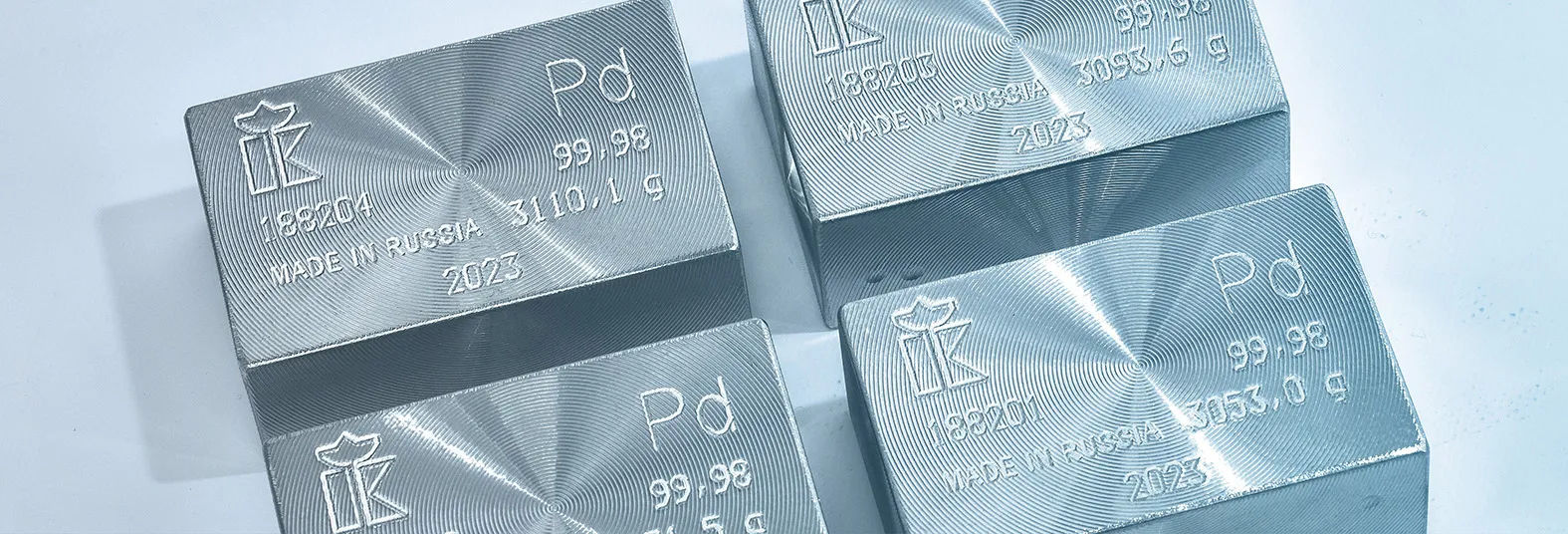
The Company’s products comply with national and international quality standards.
The Company successfully met all its obligations to customers in 2025, having never failed to deliver on its commitments. This solid performance was to a large extent driven by Nornickel’s long‑standing policy of building direct relationships with customers and distributors.
In 2025, the Company’s products were supplied to key metal‑consuming countries.
Nornickel metals’ applications
Nickel
Machine building, chemical and petrochemical industries, construction, and production of household appliances and cutlery
Nickel is used in stainless steel production. Adding nickel as an alloying element to stabilise the austenitic structure enhances steel’s corrosion resistance, high‑temperature strength, weldability, ductility, and resistance to aggressive environments
Aerospace industry
Nickel‑based heat‑resistant alloys offer strong resistance to aggressive environments and are used in the production of aircraft engine components
EV batteries
Nickel is a key element used in the production of precursor cathode active materials for EV batteries. Nickel‑intensive NCM and NCA batteries are largely favoured for their high gravimetric and volumetric energy density, which extends driving range. Nickel‑based batteries are also more suitable for recycling and reuse than other types of battery systems
Renewable energy
Nickel alloys are used in wind, solar, and geothermal generation
PGMs
Automotive industry
Palladium, platinum, and rhodium are used as active materials in automotive exhaust gas catalysts to minimise the vehicles’ environmental impact
Healthcare
PGMs are extensively used as catalysts in pharmaceutical synthesis. Palladium has also found wide application in dentistry, while platinum is used in medical devices such as pacemakers and as an active ingredient in cancer medicines
Chemical and petrochemical industries
Palladium, platinum, and rhodium are used as catalysts in chemical and petrochemical processes, helping industry players achieve high operational efficiency
Jewellery
Palladium and platinum are used to make a wide range of jewellery that stands out not only for its beauty but also for its safety, durability, and high value
Electronics
Palladium is used in the production of capacitors, motherboards, and other electronic components, while platinum is found mainly in hard drives and rhodium in coatings for connectors and contacts
Glass fibre and optical glass
In the glass industry, platinum and rhodium are used to manufacture bushings for making glass fibre and optical glass
Hydrogen solutions
Platinum, palladium, iridium, and ruthenium are widely used in rapidly evolving hydrogen technologies. Platinum group metals are used as catalysts in low‑carbon hydrogen production as well as in hydrogen purification, transport, and use as an energy source in fuel cells
Copper
Automotive industry
The automotive industry uses copper in batteries, electric motors, inverters, wiring, and charging infrastructure
Construction and air conditioning and cooling systems
The construction sector uses copper in pipes and tubing, heating and cooling systems, and as a cladding material
Energy, including renewables, grid infrastructure
Copper is used in power generation, transmission, and distribution. Rising electricity consumption per capita and per unit of output is driving higher metal demand.
Copper is also widely used in the construction of wind, solar, and other types of renewable power plants
Electronics and home appliances
Copper is used in electronics and home appliances owing to its superior electrical and thermal conductivity. Growth in data centres, including AI‑driven, is boosting copper demand
Sales and distribution strategy
As the world’s largest producer of several metals, Nornickel views sales and distribution as a key pillar of its business, on par with production. The key objective of sales and distribution is to ensure current and future liquidity across the entire product range.
The Group sells its products globally both through its own sales offices in Europe, China, and Russia and via distributors in other regions.
The Company’s market reach enables it to respond promptly to evolving demands in terms of product quality and services as well as to changes in the market environment and other external conditions affecting sales and distribution. Nornickel favours direct sales to industrial customers, while also engaging other professional market participants willing to partner with the Company to promote its products.
Nornickel has traditionally positioned itself as a responsible supplier committed to the sustainable development of end markets for its core products and not seeking to benefit from its market position to the detriment of other participants. Regardless of external conditions, customers can rely on Nornickel for a stable supply and unrestricted access to consistent‑quality products in volumes matching market demand.
Nickel sales and distribution strategy
The Company’s nickel product sales mix matches the global nickel consumption profile, where the key end‑use segments include stainless and specialty steel production, alloy manufacturing, and electroplating. The battery sector is also growing in importance.
To capture the expected mid‑ and long‑term growth in nickel demand from the battery sector, Nornickel continues to advance a number of initiatives to enhance and expand its existing product range supporting the battery supply chain. The significant increase in Indonesian nickel supply may become a limiting factor in the delivery of these initiatives. Nevertheless, the competitive advantages of Norilsk Nickel products, such as their low carbon footprint and full compliance with internationally recognised environmental standards, support the Company’s continued presence in market segments that traditionally prioritise these qualities, particularly in sustainable electric vehicle production.
The sales and distribution strategy for nickel products is aimed at striking a healthy balance between supplies to stainless and special steel producers and deliveries to other industries, thereby ensuring the Group’s stable sales performance amid shifting consumption trends in end‑use markets.
In recent years, the battery sector has been the fastest‑growing end‑use segment. The Company is strongly focused on building long‑term relationships with key market participants and explores various forms of cooperation with customers in the battery sector. Nornickel also conducts research in battery recycling and works on developing integrated solutions for the future battery supply chain.
In the alloys, special steels, and electroplating sectors, the Company aims to fully leverage the strengths of its product portfolio and enhance product quality to expand its presence in premium segments with high quality requirements.
PGM sales and distribution strategy
The automotive industry and process catalysts, as well as jewellery and medical products, have traditionally remained the key market segments for platinum group metal (PGM) products.
As the world’s largest producer of palladium, the Company continues to focus on expanding relationships with major end users and key market participants to support long‑term and sustainable demand. At the same time, Nornickel takes part in various initiatives aimed at further promoting the use of palladium in various future industrial applications. Among other initiatives, Nornickel is actively developing palladium‑based solutions for emerging technologies, including hydrogen energy, advanced chemistry, solar power, glass and glass fibre production, and other areas that have the potential to expand the metal’s applications going forward.
Product quality
In 2025, Nornickel once again reaffirmed its reputation as a reliable supplier of high‑quality products. The Company places top priority on delivering consistent‑quality products and related services to maximise customer satisfaction. The Company’s products comply with national and international quality standards. Nornickel’s production sites have established procedures during both the manufacturing process and final product release to manage non‑conforming products and prevent their delivery to customers. The handling of such products, responses to customer complaints, and corrective actions are carried out in accordance with documented procedures compliant with ISO 9001:2015. With regard to product acceptance by customers, the Company follows the instruction on the procedure for acceptance of products by quantity and quality, as well as the relevant product supply contract.
All of the Company’s products are certified, with safety certificates issued that set out product‑specific requirements for transportation and handling.
The Company successfully maintains certification to international standards such as ISO 9001 (quality management), ISO 45001 (occupational health and safety management), ISO 14001 (environmental management), and ISO/IEC 27001 (information security management).
In line with the principles of transparency and openness in disclosing product quality information to customers and other stakeholders, up‑to‑date data on the physical and chemical properties of the Company’s products are readily available in the Products section of the Company website.
Customer complaints and queries, number of cases
Indicators
2021
2022
2023
2024
2025
Indicators
2021
2022
2023
2024
2025
Total customer complaints and queries regarding product quality
18
16
27
30
24
Of which were substantiated
10
3
13
6
10
Customer satisfaction
Every year, the Company conducts a customer satisfaction survey in line with ISO 9001 to collect feedback from its customers. The feedback received is reviewed and incorporated into initiatives to improve product and service quality.
Nornickel is committed to continuous improvement. The integrated index of customer satisfaction with the Company’s products and services was fully in line with our target for 2025.
Customer satisfaction is measured and assessed using a numerical satisfaction score. The evaluation is based on criteria that reflect the quality attributes of the Company’s products and services. Each criterion is evaluated using the following scale: 3 points – the customer is fully satisfied; 2 points – the customer is partially satisfied; 1 point – the customer is not satisfied with the quality of the Company’s products and services.
Customer satisfaction level, points
During the reporting period, Nornickel retained most of its customer base and established new partnerships in new markets, promptly adding new clients to its portfolio.
Customer data protection policy
Personal data protection at Nornickel is governed by the Personal Data Processing and Security Guidance and the Personal Data Processing Policy, both developed in line with legal requirements. Documents provided by customers and containing personal data, among other information, are stored in Nornickel’s corporate information systems in compliance with relevant data protection regulations. In 2025, there were no data‑related incidents involving customers’ personal data.